
Let's talk turkey,
Before you gobble down that yummy Thanksgiving dinner, take a few Meleagris gallopavo language lessons. That's scientificeeze for Wild Turkey. Peck at the link below to understand some turkey talk:
http://www.nwtf.org/special_events/calling_contest_turkey_calls.html
You'll notice that gobbling is barely even mentioned, the last vocalization on the list. You won't hear it this time of year in the wild, as males gobble to attract females during the mating season in spring.
Going the way of many wild foods, like cod that disappeared from over-fishing, turkeys were nearly hunted to extinction in the wild. They were completely extripated from New England and most of their range by 1900. But at least for turkeys, we have a happy ending to the story. Re-introduction of native stock wild birds, in the 1940's worked well. In fact, too well. For today, turkeys range across the 48 contiguous states, even into areas where they did not originally occur.
These past few weeks on my way to work, I've seen two large turkey flocks, about 30 birds in each. This time of year the hens travel together separately from the toms. One flock of turkeys was stuffing themselves with wind-fall apples. And I must confess I thought to myself, mmmmmm apple stuffing. Turkeys also feast upon acorns, beech nuts, buds, salamanders and insects.
And as you savor the delicious flavor of your Thanksgiving turkey (or tofurkey), pause to remember that we could well be feasting upon fishy tasting eagle. For good 'ol Ben Franklin wanted Wild Turkey to be our national bird. In his own words,
the Eagle "where, too lazy to fish for himself, he watches the Labour of the Fishing Hawk; and when that diligent Bird has at length taken a Fish, and is bearing it to his Nest for the Support of his Mate and young Ones, the Bald Eagle pursues him and takes it from him.
"With all this Injustice, he is never in good Case but like those among Men who live by Sharping & Robbing he is generally poor and often very lousy. Besides he is a rank Coward: The little King Bird not bigger than a Sparrow attacks him boldly and drives him out of the District. He is therefore by no means a proper Emblem for the brave and honest Cincinnati of America who have driven all the King birds from our Country .
For the Truth the Turkey is in Comparison a much more respectable Bird, and withal a true original Native of America . . . He is besides, though a little vain & silly, a Bird of Courage, and would not hesitate to attack a Grenadier of the British Guards who should presume to invade his Farm Yard with a red Coat on."
http://www.greatseal.com/symbols/turkey.html
For more on our wild turkeys, check out:
http://www.birds.cornell.edu/AllAboutBirds/BirdGuide/Wild_Turkey.html
Happy Thanksgiving from
The Dorr Museum of Natural History
Wednesday, November 21, 2007

Thursday, November 8, 2007
Early November
Nocturnal Greetings,
Tonight is the anniversary of the discovery of Comet 17P/Holmes that is currently gracing our night sky. 115 years ago tonight it exploded becoming bright enough to see. Edwin Holmes was in his backyard in London looking through his telescope. Just before calling it a night, he aimed his scope to get a look at our sister galaxy, Andromeda's faint companions. http://www.astropix.com/HTML/SHOWCASE/M31.HTM
The comet, which now bears his name, was so big and bright that at first he mistook it for the Andromeda Galaxy! That was 1892. If only he could see it tonight, for Comet Holmes has exploded again and is even bigger and brighter than Andromeda. Take a look at it tonight. Here's a sky chart to help you find it. It's really impressive viewed through binoculars! http://www.spaceweather.com/images2007/05nov07/skymap_north_holmes.gif?PHPSESSID=05pdchsmhb13job27qrhk97h10
It's been warm enough this fall that some of our bats are still flying! Our tree bats, the beautiful Red Bat, Lasiurus borealis, meaning "northern furry-tailed".
http://www.outdooralabama.com/watchable-wildlife/images/red%20bat.jpg
and its sister species the Hoary Bat, Lasiurus cinereus, ("ash-colored furry-tailed") http://research.amnh.org/swrs/lascin.jpg
and the Silver-haired Bat, Lasionycteris noctivagans, ("wandering furry night bat") http://research.amnh.org/swrs/lasnoc.jpg have all flown the coop to find suitable hibernation spots.
Unlike bird migration, which around here in fall is always to the south, except for seabirds who head out to sea, bats migrate in any direction to seek temperatures just right for hibernation; cold enough so they can slow their metabolism, but warm enough that they don't freeze. Some Little Brown Bats, Myotis lucifugus, ("light-fleeing mouse-eared") http://fwp.mt.gov/content/getItem.aspx?id=2699&maxwidth=475 fly northeast to hibernate in small caves and crevices or ice caves in the Allegash.
Big Brown Bats, Eptesicus fuscus, ("dusky brown flying over") http://www.americanartifacts.com/smma/per/bat1.jpg are fond of hibernating together in Maine's old forts and even above the library at UMO!
Other nightlife spotted recently include:
Sawwhet owls seen flying over roads at night
Coyotes loping across the highway
Foxes hunting in fields, revealed by their bright eye-shine
Moths still coming to porch lights
Barred Owls calling "who cooks for you, who cooks for you-all"
Enjoy the crisp fall evenings,
The Dorr Museum of Natural History
Tonight is the anniversary of the discovery of Comet 17P/Holmes that is currently gracing our night sky. 115 years ago tonight it exploded becoming bright enough to see. Edwin Holmes was in his backyard in London looking through his telescope. Just before calling it a night, he aimed his scope to get a look at our sister galaxy, Andromeda's faint companions. http://www.astropix.com/HTML/SHOWCASE/M31.HTM
The comet, which now bears his name, was so big and bright that at first he mistook it for the Andromeda Galaxy! That was 1892. If only he could see it tonight, for Comet Holmes has exploded again and is even bigger and brighter than Andromeda. Take a look at it tonight. Here's a sky chart to help you find it. It's really impressive viewed through binoculars! http://www.spaceweather.com/images2007/05nov07/skymap_north_holmes.gif?PHPSESSID=05pdchsmhb13job27qrhk97h10

It's been warm enough this fall that some of our bats are still flying! Our tree bats, the beautiful Red Bat, Lasiurus borealis, meaning "northern furry-tailed".
http://www.outdooralabama.com/watchable-wildlife/images/red%20bat.jpg

and its sister species the Hoary Bat, Lasiurus cinereus, ("ash-colored furry-tailed") http://research.amnh.org/swrs/lascin.jpg

and the Silver-haired Bat, Lasionycteris noctivagans, ("wandering furry night bat") http://research.amnh.org/swrs/lasnoc.jpg have all flown the coop to find suitable hibernation spots.

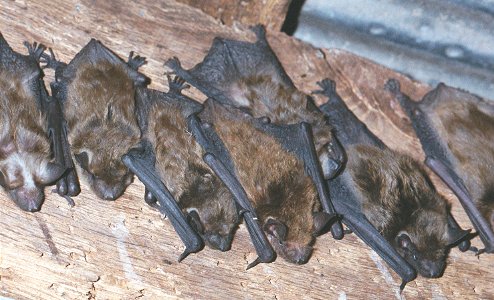
Unlike bird migration, which around here in fall is always to the south, except for seabirds who head out to sea, bats migrate in any direction to seek temperatures just right for hibernation; cold enough so they can slow their metabolism, but warm enough that they don't freeze. Some Little Brown Bats, Myotis lucifugus, ("light-fleeing mouse-eared") http://fwp.mt.gov/content/getItem.aspx?id=2699&maxwidth=475 fly northeast to hibernate in small caves and crevices or ice caves in the Allegash.
Big Brown Bats, Eptesicus fuscus, ("dusky brown flying over") http://www.americanartifacts.com/smma/per/bat1.jpg are fond of hibernating together in Maine's old forts and even above the library at UMO!
Other nightlife spotted recently include:
Sawwhet owls seen flying over roads at night
Coyotes loping across the highway
Foxes hunting in fields, revealed by their bright eye-shine
Moths still coming to porch lights
Barred Owls calling "who cooks for you, who cooks for you-all"
Enjoy the crisp fall evenings,
The Dorr Museum of Natural History
Subscribe to:
Comments (Atom)