
Nocturnal Greetings,
Tonight is the anniversary of the discovery of Comet 17P/Holmes that is currently gracing our night sky. 115 years ago tonight it exploded becoming bright enough to see. Edwin Holmes was in his backyard in London looking through his telescope. Just before calling it a night, he aimed his scope to get a look at our sister galaxy, Andromeda's faint companions. http://www.astropix.com/HTML/SHOWCASE/M31.HTM
The comet, which now bears his name, was so big and bright that at first he mistook it for the Andromeda Galaxy! That was 1892. If only he could see it tonight, for Comet Holmes has exploded again and is even bigger and brighter than Andromeda. Take a look at it tonight. Here's a sky chart to help you find it. It's really impressive viewed through binoculars! http://www.spaceweather.com/images2007/05nov07/skymap_north_holmes.gif?PHPSESSID=05pdchsmhb13job27qrhk97h10
It's been warm enough this fall that some of our bats are still flying! Our tree bats, the beautiful Red Bat, Lasiurus borealis, meaning "northern furry-tailed".
http://www.outdooralabama.com/watchable-wildlife/images/red%20bat.jpg
and its sister species the Hoary Bat, Lasiurus cinereus, ("ash-colored furry-tailed") http://research.amnh.org/swrs/lascin.jpg
and the Silver-haired Bat, Lasionycteris noctivagans, ("wandering furry night bat") http://research.amnh.org/swrs/lasnoc.jpg have all flown the coop to find suitable hibernation spots.
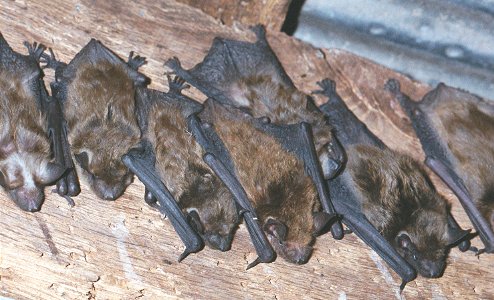
Unlike bird migration, which around here in fall is always to the south, except for seabirds who head out to sea, bats migrate in any direction to seek temperatures just right for hibernation; cold enough so they can slow their metabolism, but warm enough that they don't freeze. Some Little Brown Bats, Myotis lucifugus, ("light-fleeing mouse-eared") http://fwp.mt.gov/content/getItem.aspx?id=2699&maxwidth=475 fly northeast to hibernate in small caves and crevices or ice caves in the Allegash.
Big Brown Bats, Eptesicus fuscus, ("dusky brown flying over") http://www.americanartifacts.com/smma/per/bat1.jpg are fond of hibernating together in Maine's old forts and even above the library at UMO!
Other nightlife spotted recently include:
Sawwhet owls seen flying over roads at night
Coyotes loping across the highway
Foxes hunting in fields, revealed by their bright eye-shine
Moths still coming to porch lights
Barred Owls calling "who cooks for you, who cooks for you-all"
Enjoy the crisp fall evenings,
The Dorr Museum of Natural History


No comments:
Post a Comment